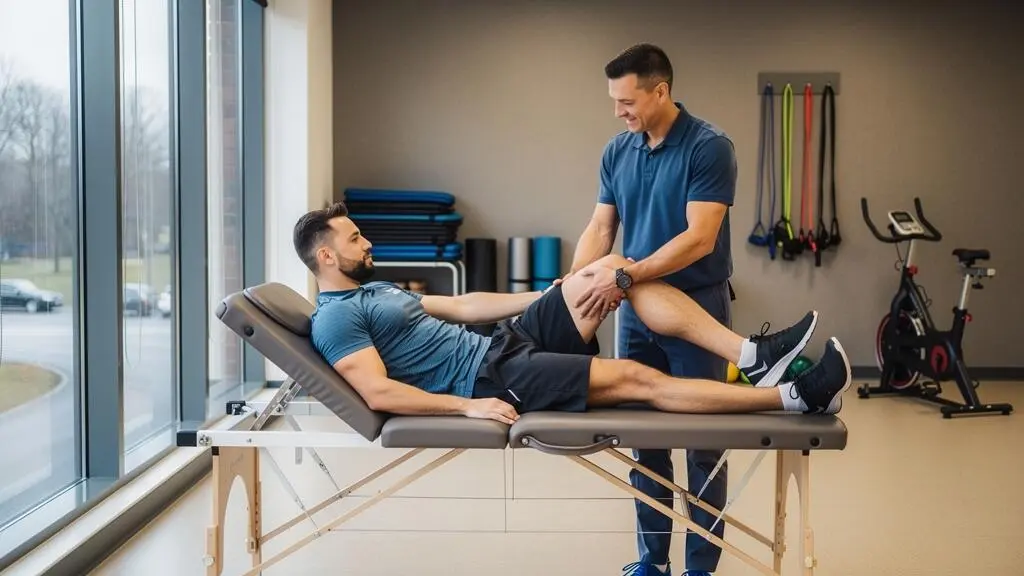
Athletes facing an ACL tear or a meniscus injury often confront a frustrating timeline: domestic waiting lists for non-emergency orthopaedic surgery can stretch across several months, pushing recovery well beyond the current competitive season. This delay is the primary reason a growing number of amateur and semi-professional athletes explore knee surgery abroad — to access high-volume specialist surgeons and shorter scheduling windows. The option can be safe, provided the surgeon’s credentials, the clinic’s accreditation and the cross-border follow-up plan are rigorously verified before any commitment is made.
What you need to know before considering knee surgery abroad
- ACL reconstruction restores rotational knee stability; meniscus repair preserves the joint’s shock-absorbing cartilage — both are often needed after a single athletic injury.
- Athletes go abroad mainly to reduce waiting times and access surgeons who perform a high annual volume of knee reconstructions.
- Safety hinges on three verifiable factors: surgeon case volume, clinic accreditation and a structured post-operative follow-up plan at home.
- Return to sport after ACL reconstruction typically requires several months of supervised rehabilitation, and outcomes vary significantly by individual.
ACL reconstruction and meniscus repair: what these procedures involve
ACL reconstruction replaces the torn anterior cruciate ligament with a tissue graft, most commonly harvested from the patient’s own hamstring or patellar tendon. The objective is to restore the knee’s rotational stability, which is essential for pivoting and cutting movements in sports such as football, basketball, handball and skiing.
Meniscus repair addresses damage to the C-shaped cartilage that cushions the knee joint between the femur and the tibia. When the tear is located in a vascularised zone, the surgeon can suture the meniscus back together, preserving long-term joint health and reducing the risk of early osteoarthritis. If the tissue is too severely damaged, a partial meniscectomy — removing only the torn fragment — may be the only viable option, though this carries greater long-term joint wear implications.
In many athletic injuries, both structures are affected simultaneously. A common scenario involves an ACL rupture combined with a medial meniscus tear sustained during a sudden change of direction on the pitch. Treating both injuries during a single arthroscopic session is standard practice and can streamline the overall rehabilitation timeline compared to staging two separate procedures.
Why do athletes consider knee surgery abroad?
The most immediate driver is time. In France, the Haute Autorité de Santé recommendations on ACL rehabilitation note that approximately 36,540 knee ligamentoplasties are performed each year, 90% of which involve the anterior cruciate ligament. Despite this high volume, public waiting times for non-urgent orthopaedic surgery can extend to several months depending on the region and the facility. For an athlete whose season window or contract renewal is at stake, that delay can be the deciding factor.
Surgical expertise is another key consideration. The Cour des comptes report on surgical specialisation found that a low-volume facility carries a 37% higher probability of complications compared to a highly specialised centre for major knee procedures. Athletes exploring options abroad frequently target clinics where the lead surgeon performs a high annual caseload of ACL reconstructions, a factor consistently associated with more predictable outcomes in the orthopaedic literature.
Cost differences within Europe also play a role, though they vary widely between countries and between public and private settings. Some destinations offer comparable surgical standards at lower out-of-pocket costs, which can be relevant for athletes without comprehensive private insurance coverage.
Structured coordination services such as International Elite Care have developed to help patients navigate these cross-border pathways by aligning surgeon selection, travel logistics and post-operative follow-up into a single organised process.
What safety and quality standards should you check?
Choosing a surgeon abroad requires at least the same diligence you would apply at home — and arguably more, given that you will be navigating an unfamiliar healthcare system and returning to a different country for recovery.
Surgeon credentials and case volume. Verify that the surgeon holds board certification in orthopaedic surgery in their country of practice and has completed specific fellowship training in sports medicine or knee surgery. Ask directly about their annual ACL reconstruction volume. Surgeons performing a high number of these procedures each year tend to achieve more consistent results and lower complication rates.
Clinic accreditation and regulatory oversight. Look for internationally recognised accreditation such as Joint Commission International (JCI) or the equivalent national accreditation body in the destination country. Accreditation confirms that the facility meets defined standards for patient safety, infection control, staffing ratios and surgical protocols. You should also verify which national medical authority regulates the clinic and whether the surgeon holds an active licence without disciplinary restrictions.
Cross-border follow-up organisation. This is frequently the weakest link in medical travel. Before committing, confirm exactly how post-operative care will be coordinated once you return home. Will your operating surgeon communicate directly with your local physiotherapist? Is there a scheduled telemedicine follow-up plan? Who manages complications if they arise weeks or months after surgery?
- What is your annual volume of ACL reconstructions and meniscus repairs?
- Which graft technique do you recommend for my specific injury pattern and sport?
- What is your clinic’s documented infection rate for knee arthroscopy?
- How will my rehabilitation protocol be transferred to my local physiotherapist?
- What is the procedure if a complication arises after I have returned home?
How the patient journey works, from first consultation to rehabilitation
A well-organised surgery journey abroad follows a structured sequence designed to reduce uncertainty at every stage, from the initial medical review to the final phases of rehabilitation at home.
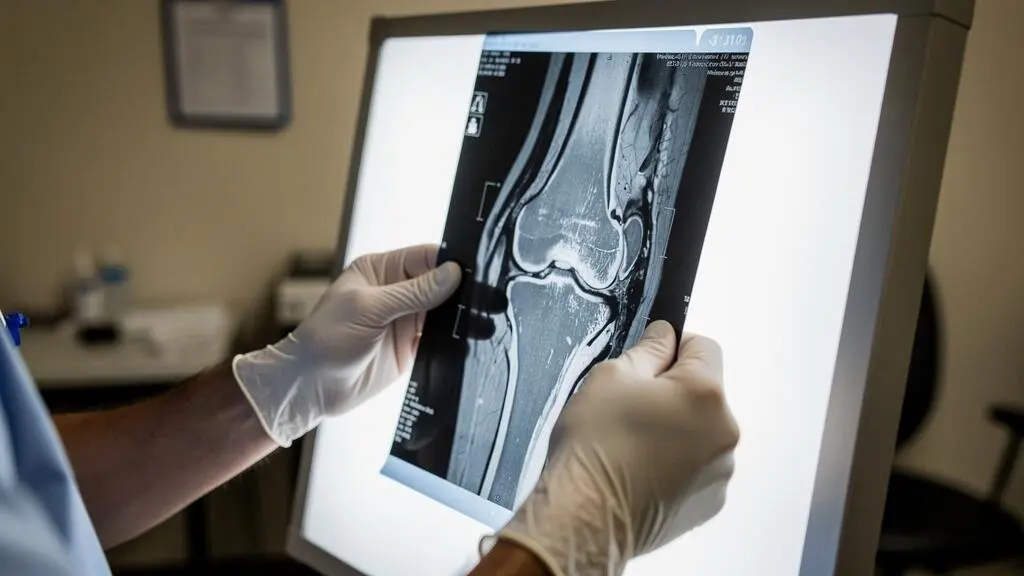
Remote consultation and medical review. The process typically begins with a video consultation during which the surgical team reviews your MRI scans and clinical history. This step determines whether surgery is indicated, which technique best suits your injury profile and whether any additional imaging or tests are needed before you travel.
Surgical planning and travel arrangements. Once the procedure is confirmed, the clinic coordinates the surgical date, hospital admission and logistical details. Most patients arrive one to two days before the operation for a final in-person assessment, pre-operative blood work and anaesthesia consultation.
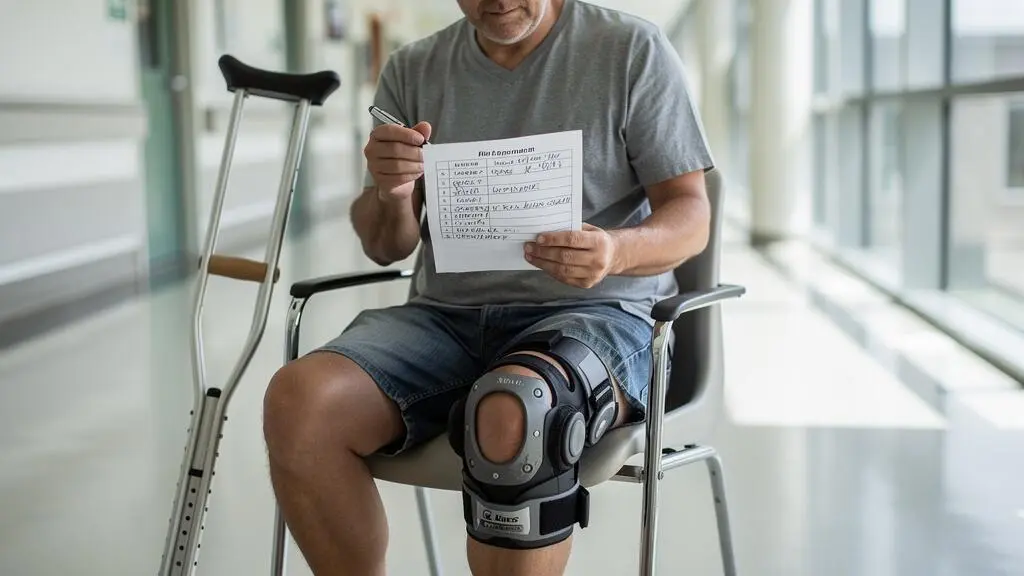
Hospital stay and early recovery. ACL reconstruction combined with meniscus repair is generally performed as a short-stay procedure. Patients typically spend one to three nights in the clinic depending on the complexity of the repair and the anaesthesia protocol used. Early mobilisation with crutches and a hinged knee brace usually begins the day after surgery under the supervision of an in-house physiotherapist.
Rehabilitation and remote follow-up after returning home. The most critical phase starts once you are back in your home country. A structured rehabilitation programme — ideally supervised by a local physiotherapist who has received the surgeon’s written protocol — typically spans six to nine months for a combined ACL and meniscus procedure. Regular telemedicine check-ins with the surgical team during the first three to four months help monitor healing progress, adjust the exercise programme and identify any early warning signs of complications.
Is surgery abroad the right decision for your situation?
The answer depends on your specific injury, your sport, your competitive timeline and your capacity to organise reliable follow-up care at home. Surgery abroad is not inherently safer or riskier than surgery at home — the outcome depends on the quality of the surgical team, the facility and the rehabilitation pathway you put in place.
A French multicentre study on return to sport after ACL reconstruction found that 88% of athletes had resumed some form of sporting activity at an average follow-up of 23.7 months. However, only 38% returned to their pre-injury competitive level, and 47.5% of competitive athletes resumed pivoting sports in competition. These figures highlight that surgery is a necessary but not sufficient condition for a full return to sport — the quality of rehabilitation and individual biological factors play an equally decisive role.
Specific risks of medical travel to consider: long-haul travel within the first two weeks after knee surgery increases the risk of deep vein thrombosis, and any post-operative complication that arises after your return may be more difficult to manage without direct, in-person access to your operating surgeon.
In certain situations, conservative treatment — a structured physiotherapy programme without surgery — may be a reasonable first approach, particularly for partial ACL tears or stable meniscus lesions in athletes who do not compete in high-demand pivoting sports. This decision should always be made in consultation with your local orthopaedic surgeon before exploring options abroad.
- Long domestic waiting list with a time-sensitive competitive season:
Surgery abroad may offer a faster pathway, provided you can independently verify surgeon expertise and organise structured cross-border follow-up.
- Complex or revision knee injury:
Prioritise a high-volume specialist regardless of geographic location, and ensure a detailed long-term rehabilitation plan is in place at home before travelling.
- Stable knee with no mechanical symptoms:
Discuss conservative management with your local orthopaedic surgeon before committing to any surgical option, whether domestic or abroad.
Deciding whether surgery abroad is right for you requires an honest assessment of your medical situation, your support network at home and your willingness to commit to a structured, months-long rehabilitation programme.
Medical disclaimer: this article provides general information only and does not constitute personalised medical advice. Any decision regarding ACL reconstruction or meniscus repair should be made in direct consultation with a qualified orthopaedic surgeon who has examined your knee and reviewed your imaging.
How long before returning to sport after ACL reconstruction?
Most athletes require between six and twelve months of structured rehabilitation before returning to pivoting sports. The exact timeline depends on the graft type used, whether the meniscus was repaired or partially removed, and the athlete’s adherence to the rehabilitation protocol. Returning too early significantly increases the risk of re-rupture.
Is it safe to have knee surgery abroad?
Knee surgery abroad can be safe when three conditions are met: the operating surgeon is highly specialised with a documented high annual case volume, the clinic holds recognised accreditation, and a detailed cross-border follow-up plan is established before departure. The risks increase when any of these elements is missing or poorly organised.
What are the risks of having knee surgery abroad and returning home for follow-up?
The main risks include limited access to the operating surgeon if a complication arises weeks after the procedure, potential communication gaps between the surgical team and your local physiotherapist, and the elevated risk of blood clots associated with long-distance travel in the immediate post-operative period. These risks can be mitigated but not entirely eliminated through careful planning.
Whatever path you choose, the most reliable foundation for a successful return to sport remains the same: a skilled surgeon, a well-executed procedure and a rehabilitation programme you can sustain over the long term.